Free High-Authority Backlink Generator
🔗 Free Backlink Generator Tool
Bulk Backlink Generator
Generate high-quality backlinks from 50+ authority websites instantly. Boost your SEO rankings with our free organic backlink builder.
✅ 50+ Authority Sites
🔗 DoFollow Links
⚡ Instant Generation
⬇ Download CSV
Generate Backlinks for Your Website
Enter your website URL and get backlinks from 50+ high-authority websites instantly
💡 Enter your full website URL including https:// — backlinks will be generated for this URL
Generating backlinks...
0%
🌐 Connecting Sites
📝 Submitting URL
🔗 Building Links
✅ Verifying
📊 Report Ready
Generated Backlinks
0 links
| Website | DA | Type | Category | Status | Visit |
|---|
⚡ How It Works
1
Enter Your URLPaste your website URL in the input field above
2
Click GenerateHit Generate Backlinks to start the process
3
Links CreatedYour URL gets submitted to 50+ authority sites
4
View ReportSee all generated backlinks with DA and status
5
Download CSVExport all backlinks for your SEO records
High Authority Backlink Generator: The Definitive Guide to Building Powerful Links
In the ever-evolving world of search engine optimization, one truth has remained constant since Google first launched its algorithm: the quality of links pointing to your website determines, in large part, where you rank. Not just any links authoritative, trusted, contextually relevant connections from domains that carry genuine weight in their respective industries. A high authority backlink generator is a tool or system that helps website owners, SEO professionals, and digital marketers identify, create, and acquire these premium link sources in a structured, scalable way. Understanding how to leverage such a tool effectively and what separates genuinely valuable link sources from low-quality noise is one of the most important skills in modern SEO practice.
The distinction between a link that moves the needle and one that does nothing or worse, triggers a penalty comes down to a handful of measurable quality signals. Domain authority, trust flow, topical relevance, link placement, and the natural context surrounding the anchor text all play roles in determining how much ranking benefit a given backlink delivers. A well-designed link building tool helps you navigate these variables systematically, surfacing opportunities that meet your quality thresholds while filtering out the sources that could harm rather than help your standing in search results.
Before diving into link acquisition strategies, it is worth ensuring your broader SEO toolkit is fully equipped. Technical checks like AMP Validator confirm that your mobile pages meet Google’s standards, while the Keyword Density Checker ensures your on-page content is optimally balanced both of which strengthen the foundation that your authority links will build upon.
What Is a High Authority Backlink Generator and How Does It Work
A high authority backlink generator is a platform or methodology that systematically identifies and facilitates the creation of inbound links from domains with strong domain authority scores, high trust flow ratings, and established credibility in their respective subject areas. Unlike bulk link tools that indiscriminately create thousands of low-quality directory submissions or forum profile links, a genuine authority link builder focuses on quality over volume prioritizing a smaller number of powerful, editorially placed links that pass significant link equity to the target page.
The mechanics vary depending on the tool’s approach. Some platforms maintain curated databases of high-DA websites that accept guest contributions, resource page placements, or editorial mentions. Others use crawling technology to identify broken link opportunities on authoritative sites, allowing you to pitch your content as a replacement. The most sophisticated systems combine multiple acquisition methodologies into a single workflow, helping you manage outreach, track responses, and monitor the status of earned placements all while keeping your overall link profile natural and diversified enough to withstand algorithmic scrutiny.
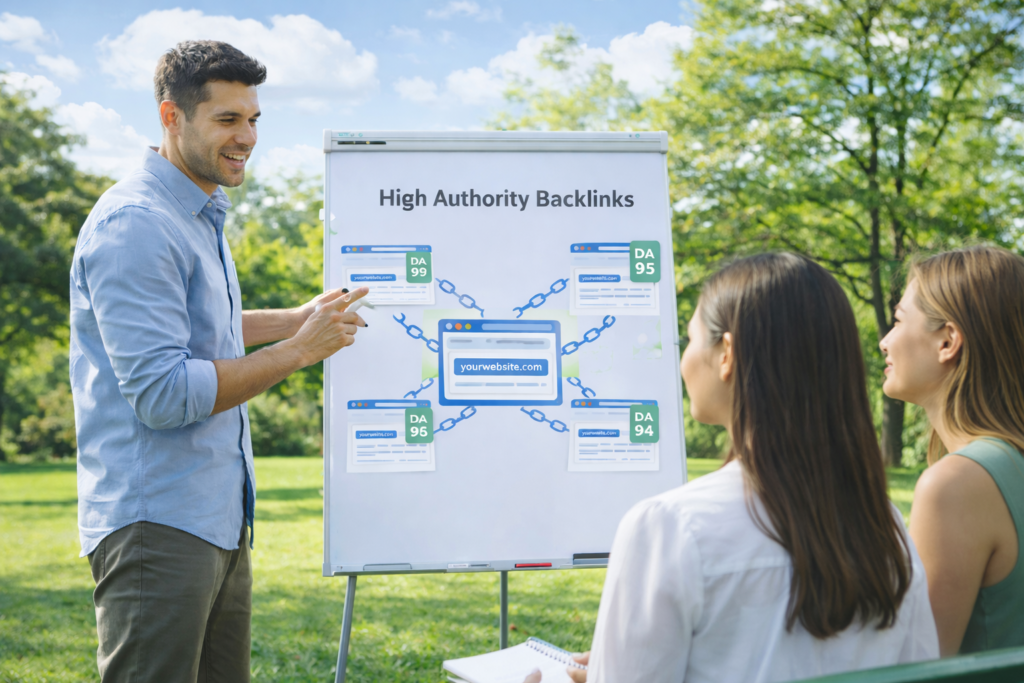
What unites all legitimate authority link building approaches is the emphasis on relevance alongside raw domain authority. A link from a DA 85 domain in a completely unrelated industry carries far less topical weight than a contextual backlink from a DA 60 site that covers the same subject matter as your target page. Modern search algorithms evaluate not just the strength of the linking domain but the semantic relationship between the linking content and the linked destination. This is why the best link building campaigns balance authority metrics with genuine topical relevance in every placement they pursue.
Understanding Domain Authority and What Makes a Backlink Truly High Quality
Domain authority is a third-party metric developed by Moz that predicts how well a website is likely to rank in search engine results based on the quality and quantity of its inbound link profile. Scored on a logarithmic scale from 1 to 100, the metric is heavily influenced by the number of unique referring domains pointing to a site, the authority of those domains, and the absence of toxic or manipulative links. A site with a DA of 70 or above is generally considered a premium link source one that passes substantial link juice to any page it references with a dofollow connection.
Trust flow, developed by Majestic, adds another dimension to quality assessment by measuring how closely a site’s link profile resembles those of trusted seed sites authoritative domains in categories like government, education, and established media. A high trust flow score indicates that the site earns links from genuinely credible sources rather than link schemes or private networks. When evaluating link prospects through any authority link builder, looking for the combination of strong domain authority and healthy trust flow gives you the most reliable picture of a source’s true SEO value.
Pairing your link building efforts with smart keyword research amplifies results significantly. The Keyword Suggestion Tool helps identify the terms worth targeting with each placement, and the Bulk Domain Rating Checker Tool lets you evaluate the authority of multiple link prospects simultaneously saving considerable time during the prospecting phase of any campaign.
The Role of Link Juice in Authority Link Building
Link juice is the colloquial term for the ranking signal passed from one page to another through a hyperlink. When a page with strong PageRank flow the underlying metric that link juice represents links to your content with a dofollow attribute, it transfers a portion of its accumulated authority to the destination URL. The amount transferred depends on the linking page’s own authority, the number of other outbound links on that page, the placement of the link within the content, and whether any nofollow or sponsored attributes are present that might dilute or block the transfer entirely.
Understanding link juice distribution is essential for prioritizing which placements deliver the greatest return on your outreach investment. A contextual link embedded within the body of a substantive article on a high-DA domain typically passes more authority than a sidebar or footer link on the same site. Links placed near the top of an article, within the first few paragraphs of content, are generally considered to carry more weight than those buried at the bottom. When using an authority link creation tool to identify prospects, factoring in these placement variables not just the domain-level metrics gives you a more accurate picture of a placement’s true value.
Edu and Gov Backlinks: Why They Carry Exceptional Weight
Among the most coveted link sources in the SEO world are those from educational institutions and government entities domains ending in .edu and .gov respectively. These domains carry exceptionally high trust flow scores because they are tightly regulated, have strict editorial standards for outbound links, and maintain long histories of credible content that earn natural links from across the web. A single contextual backlink from a .edu research page or a .gov resource directory can deliver more ranking benefit than dozens of standard commercial links from lesser sources.
Acquiring edu and gov links requires a different approach than typical outreach. Most educational and government sites do not accept paid placements or standard guest post pitches. Instead, these links are earned by creating genuinely valuable resources original research, comprehensive guides, publicly useful tools, or scholarship programs that give institutional web managers a legitimate reason to reference your content. The effort required is substantially higher than standard link building, but the long-term authority benefit and the difficulty competitors face in replicating these placements makes them among the highest-value investments in any serious SEO campaign.
Social signals increasingly complement link authority in Google’s evaluation of content credibility. A well-optimized Twitter Card Generator ensures that your content displays compellingly when shared on social platforms increasing the likelihood that high-authority site owners and editors encounter your material and choose to reference it editorially, creating the kind of organic link acquisition that no tool can manufacture but smart content promotion can consistently encourage.
White Hat Link Building: Staying Safe While Scaling Authority
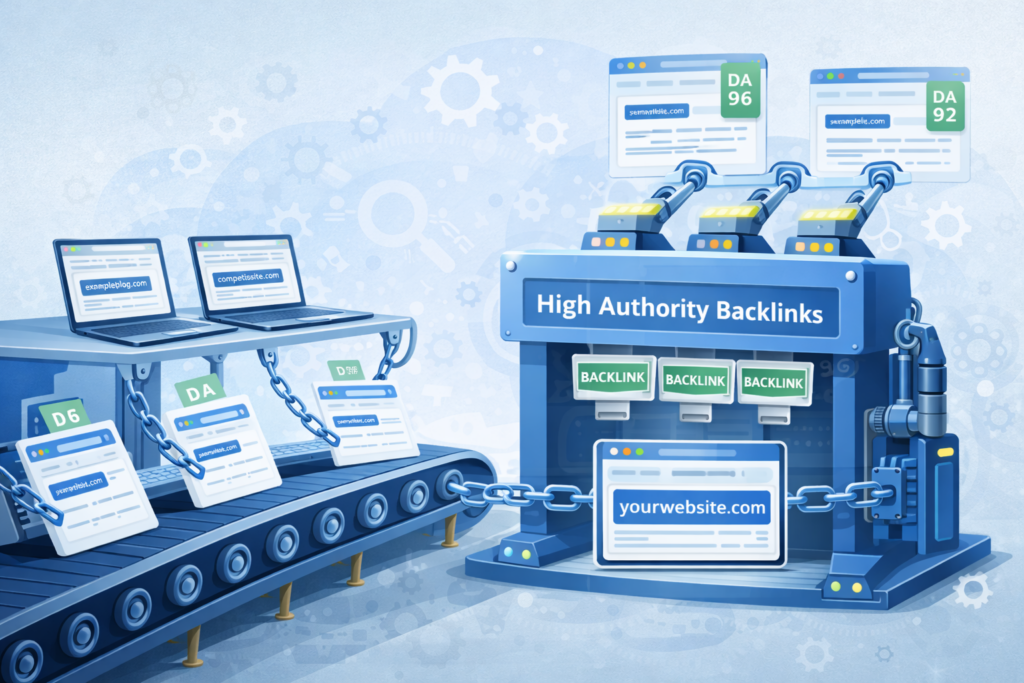
The term white hat refers to link building practices that comply with Google’s Webmaster Guidelines methods that earn links through genuine value creation rather than manipulation, deception, or artificial amplification. White hat link acquisition includes guest posting on relevant sites with original, non-promotional content; earning editorial mentions through digital PR and media outreach; creating linkable assets like original research, comprehensive guides, or useful free tools; and pursuing resource page placements by pitching your content to curators of relevant link collections.
The importance of maintaining a white hat approach has never been greater. Google’s link spam detection systems have become increasingly sophisticated, and the consequences of penalties whether manual actions from the search quality team or algorithmic demotions can take months to recover from. More importantly, clean link profiles built through legitimate methods tend to be far more durable than those constructed through shortcuts. Authority earned through genuine editorial recognition does not disappear with the next algorithm update; it compounds over time as the linking content ages and accumulates its own authority.
Targeting High DA Sites by Authority Range for Smarter Outreach
One of the most practical frameworks for organizing a link building campaign is segmenting target sites by domain authority range. Rather than pursuing every high-DA site simultaneously, focusing your outreach on specific authority tiers allows you to calibrate your pitch difficulty, content investment, and expected conversion rates more precisely. Sites in each DA bracket tend to have different editorial standards, response rates, and relationship dynamics that reward a tailored approach over generic mass outreach.
Starting with mid-tier authority sources builds momentum before targeting elite domains. Sites in the DA50 To DA60 Sites range offer strong authority with more accessible editorial standards, while DA60 To DA70 placements represent a significant step up in both link value and outreach complexity. As your campaign matures and your own site’s authority grows, targeting DA70 To DA80 sites becomes more achievable and the links you earn from these sources accelerate your authority growth substantially.
The highest authority tiers demand the most sophisticated outreach strategies. DA80 To DA90 domains typically require either an established relationship, a genuinely newsworthy story, or an exceptionally high-quality content asset to earn a placement. DA90 To DA100 sites think major news organizations, Wikipedia, and top-tier industry publications are rarely accessible through direct outreach but can be reached through digital PR campaigns, original research publication, or expert commentary placement in media coverage.
Organic Link Acquisition Through Content Strategy
The most sustainable form of authority link building is not outreach at all it is creating content so genuinely valuable that other sites choose to reference it without any prompting. This organic link acquisition model requires a deep understanding of what your target audience and the editors who serve them actually find worth linking to. Original research with unique data, comprehensive tutorials that answer questions no existing resource fully addresses, free tools that solve real problems, and definitive reference guides on complex topics are all content formats with proven track records of attracting natural editorial links from high-authority sources.
Building a content strategy around linkable assets requires upfront investment but delivers compounding returns. A single piece of original research published on your site can earn dozens of referring domains over its lifetime as journalists, bloggers, and researchers discover and cite it. Tracking which content types earn the most organic backlinks in your specific niche using your link profile data as market research helps you allocate future content investment toward formats with demonstrated link attraction performance rather than guessing what will resonate with potential linking audiences.
Traffic-Based Link Targeting: Why Organic Reach Matters
Domain authority metrics provide one lens for evaluating link prospects, but the organic traffic a site receives offers an equally important signal of its genuine relevance and credibility. A site with strong domain authority but little to no organic search traffic may have acquired its authority through historical means that no longer reflect its current standing with search engines. Conversely, a site that attracts substantial monthly visitors from search has demonstrated ongoing relevance and editorial vitality that makes its links more valuable in practice than raw DA numbers alone might suggest.
Segmenting your outreach targets by traffic range helps allocate your efforts toward sites that deliver both authority and audience exposure. Sites in the Zero To 50K Traffic range are often more accessible for outreach, while 50K To 500K Traffic sites represent the sweet spot of authority and accessibility for most mid-tier campaigns. For elite placements, targeting 100K To 500K Traffic domains and ambitious campaigns pursuing Above 500K Traffic sites deliver the kind of visibility and authority that significantly moves the needle on competitive keywords.
The Skyscraper Technique and Resource Page Link Building
The skyscraper technique, popularized by Brian Dean of Backlinko, is one of the most reliable frameworks for earning high-authority editorial links at scale. The approach involves identifying existing content that has already attracted significant backlinks, creating a substantially better version of that content on your own site, and then reaching out to the sites linking to the original to inform them of your superior resource. The logic is straightforward: editors and webmasters who have already demonstrated a willingness to link to a particular type of content are far more likely to update their references when presented with a clearly superior alternative.
Resource page link building follows a complementary logic. Across virtually every industry, curators maintain pages that compile the best tools, guides, and references for their audience and these pages are perpetually in search of high-quality additions. Identifying resource pages through targeted search queries, evaluating their authority and relevance, and pitching your best content as a worthy addition is one of the highest-conversion outreach strategies available. The key is ensuring that what you pitch genuinely adds value to the curator’s collection rather than simply requesting inclusion based on the existence of your content.

Anchor Text Optimization for Natural Link Profiles
Anchor text the visible, clickable words that form a hyperlink sends one of the most direct topical signals that a backlink delivers. Over-optimization of anchor text, where the majority of links pointing to a page use identical keyword-rich phrases, is a well-documented trigger for Google’s Penguin-related filters. A natural anchor text distribution includes a mix of exact-match keyword phrases, partial-match variations, branded terms, naked URLs, and generic phrases like ‘read more’ or ‘this resource.’ Achieving this balance requires conscious management of what anchor text you request or accept across your link building activities.
When using an authority link builder to manage outreach at scale, building anchor text diversity into your campaign parameters from the start prevents the gradual accumulation of an over-optimized profile that becomes harder to correct retroactively. For each new placement, evaluate the existing anchor text distribution in your profile before requesting or accepting any specific phrasing. If branded and generic anchors are underrepresented relative to keyword-rich variations, prioritize those types in your current outreach until the distribution returns to a naturally balanced state that reflects how real editors would organically reference your content.
Trust flow evaluation is integral to any authority link campaign. Sites with strong Trust Flow 0 To 10 ratings at the lower end of the spectrum are generally less valuable as link sources, while higher trust flow tiers represent the kind of editorially vetted domains whose links carry the most meaningful weight in Google’s quality assessment of your overall link profile.
Broken Link Building: Turning Competitor Losses Into Your Gains
Broken link building is one of the most efficient white hat strategies for earning placements on high-authority domains. The technique involves identifying links on authoritative pages that currently point to dead URLs pages that no longer exist or have moved and reaching out to the site owner to suggest your relevant content as a replacement. Because you are offering a genuine service by helping them fix a broken user experience, response rates are typically higher than cold outreach pitches, and the sites you target have already demonstrated their willingness to link to content like yours by previously hosting a similar reference.
Executing a broken link campaign at scale requires systematic crawling of target sites to identify broken outbound links, cross-referencing those links against your own content library to identify natural replacement candidates, and crafting personalized outreach that leads with the broken link notification before mentioning your replacement. Tools like Ahrefs, Screaming Frog, and Check My Links simplify the identification phase considerably. The human element the quality and personalization of your outreach pitch remains the primary determinant of conversion rates regardless of how sophisticated your prospecting technology becomes.
HARO and Digital PR: Earning Links Through Media Coverage
Help a Reporter Out, commonly known as HARO, connects journalists seeking expert sources with professionals who can provide relevant commentary, data, or perspective for their stories. Responding to relevant HARO queries with genuinely insightful, well-sourced answers earns media mentions and backlinks from the publications where the resulting articles appear often including major news outlets, industry publications, and high-authority blogs that would be nearly impossible to reach through conventional outreach. The key to HARO success is speed, specificity, and genuine expertise: journalists work on tight deadlines, need precise answers rather than generic commentary, and can easily identify responses that lack authentic knowledge of the subject matter.
Digital PR extends this logic to proactive media outreach creating newsworthy stories, original research, or compelling data visualizations and pitching them directly to relevant journalists and editors. Unlike traditional link outreach that asks for a favor, digital PR offers something genuinely valuable: a ready-made story that makes the journalist’s job easier. When executed well, a single digital PR campaign can earn dozens of high-authority editorial links from major publications in a matter of days delivering more link equity than months of conventional outreach at a fraction of the total placement count.
Managing Link Velocity for Sustainable Authority Growth
Link velocity the rate at which a website acquires new backlinks over time is a signal that search algorithms monitor for signs of manipulation. A site that earns two or three links per month for years and then suddenly acquires five hundred links in a single week raises algorithmic flags regardless of the individual quality of those links. Sustainable authority growth requires managing link acquisition pace to mirror the natural pattern of organic editorial interest gradual increases during content launches and PR campaigns, with steady baseline acquisition in between rather than feast-or-famine bursts that create suspicious velocity spikes
Planning your link building campaigns with velocity management in mind protects your site from both algorithmic scrutiny and the practical challenges of managing outreach at unsustainable intensity. Spreading a large campaign across multiple months rather than executing it all at once, interspersing active outreach periods with content creation phases, and maintaining a consistent baseline of organic link earning through evergreen content all contribute to a velocity profile that looks natural to crawlers while delivering compounding authority growth over time. This disciplined approach separates link building programs that sustain rankings long-term from those that produce short spikes followed by algorithm-driven corrections.
Monitoring and Auditing Your Authority Link Profile
Earning high-quality links is only half of the link profile management equation. Monitoring your existing profile for new acquisitions, lost links, and emerging toxic sources is equally critical to maintaining the authority you have built. Links that pointed to your site last month may no longer exist today domains expire, pages get deleted, and editorial decisions change. Tracking lost backlinks promptly allows you to pursue reclamation outreach before the loss negatively impacts your ranking signals, particularly for links from high-authority domains where the individual link equity contribution is significant.
Toxic link monitoring protects against the gradual accumulation of low-quality or spam backlinks that can dilute your profile’s authority and potentially trigger algorithmic penalties. While you cannot control who links to your site, you can use Google’s Disavow Tool to instruct Google to ignore specific links when evaluating your site effectively neutralizing the negative influence of link spam that you were unable to have removed through outreach. Regular profile audits using spam score checkers and authority assessment tools ensure that your link building investment is not quietly being undermined by problematic sources accumulating in the background.
Building a Long-Term Authority Link Strategy That Compounds Over Time
The most effective authority link building programs are not campaigns with defined start and end dates they are ongoing, integrated components of a comprehensive content and digital marketing strategy. Sites that consistently dominate their target keywords share a common characteristic: they treat link acquisition as a perpetual function, not a periodic project. This means maintaining active outreach relationships, continuously creating content designed to earn links, monitoring opportunities as they emerge, and regularly reviewing the competitive link landscape to identify new gaps and directions for investment.
Compounding link authority works because each high-quality link you earn makes the next one slightly easier to acquire. As your domain authority increases, your outreach pitches become more persuasive the sites you approach can see that linking to you is a credible editorial choice rather than a leap of faith. As your content earns organic links and social shares, it surfaces in front of more potential linking audiences without any additional outreach effort. And as your ranking positions improve on target keywords, the increased organic traffic you receive creates further opportunities for natural link discovery and acquisition. This virtuous cycle is the ultimate destination of any well-executed authority link building program, and reaching it requires nothing more or less than sustained, strategic investment in quality over time.
Frequently Asked Questions
What is a high authority backlink generator?
A high authority backlink generator is a tool or system that helps website owners identify and acquire backlinks from domains with strong domain authority scores, high trust flow ratings, and genuine editorial credibility. Unlike bulk link tools that create low-quality directory submissions, an authority link builder focuses on premium placements from relevant, trusted sources that pass significant ranking benefit to the destination page.
What makes a backlink high authority?
Several factors determine whether a backlink qualifies as high authority: the linking domain’s DA and DR scores, its trust flow rating, the topical relevance of the linking page to your content, the placement of the link within the content (contextual body links carry more weight than sidebars or footers), the anchor text used, and whether the link carries a dofollow attribute that allows link equity to pass. The combination of strong domain-level metrics and genuine topical relevance produces the most valuable placements.
Are backlink generator tools safe for SEO?
Safety depends entirely on the type of tool and the links it generates. Tools that facilitate genuine outreach to high-quality sites, help identify broken link opportunities, or surface resource page prospects are entirely safe and recommended. Tools that automatically create hundreds of links on low-quality directories, forum profiles, or private blog networks carry significant penalty risk. Always evaluate a link building tool based on the quality and editorial legitimacy of the links it produces rather than the volume or speed of acquisition it promises.
How long does it take for high authority backlinks to improve rankings?
The timeline varies based on your site’s current authority, the competitiveness of your target keywords, and the quality of the links acquired. In most cases, backlinks from high-DA domains begin influencing rankings within two to eight weeks of being indexed by Google. For competitive keywords, sustained link building over several months is typically required before significant ranking improvements become visible. The compounding nature of authority growth means results accelerate over time as your overall profile strengthens.
What is the difference between high DA and high DR backlinks?
Domain Authority (DA) is Moz’s metric for predicting ranking potential based on link profile quality. Domain Rating (DR) is Ahrefs’ equivalent metric. Both measure link profile strength but use different methodologies and data sources. DA emphasizes the diversity of linking root domains, while DR focuses more on the raw count and quality of total backlinks. Using both metrics when evaluating prospects gives a more complete picture than relying on either alone a site with strong scores on both is generally a more reliable authority link source than one with a high score on only one metric.
How do edu and gov backlinks benefit SEO?
Edu and gov domains carry exceptionally high trust flow scores because they are tightly regulated, maintain strict editorial standards, and have long histories of earning natural links from credible sources. A single contextual link from a .edu research page or .gov resource directory can deliver more ranking benefit than many commercial links of similar raw authority. These links are earned rather than purchased through original research, genuinely useful tools, scholarship programs, or expert contributions that give institutional editors a legitimate reason to reference your content.
Can generating backlinks automatically cause penalties?
Automated link generation that creates links on private blog networks, low-quality directories, or irrelevant sites at unnatural velocity carries substantial penalty risk. Google’s link spam detection has become highly sophisticated, and manipulative link schemes are identified and discounted or penalized with increasing reliability. The safest and most sustainable approach is to use tools that facilitate legitimate outreach and content promotion rather than those that automate the creation of links on sites where your content has no editorial relevance or genuine value to readers.
Conclusion: Why Quality Authority Link Building Defines Long-Term SEO Success
The pursuit of high-quality, authoritative backlinks is not a tactic that fades with algorithm updates it is the foundational principle of how Google determines which websites deserve prominent visibility in search results. Since the earliest days of PageRank, the logic has been consistent: pages that earn references from credible, relevant sources are more likely to provide genuine value to searchers. What has changed over the decades is not this principle but the sophistication with which Google applies it. A high authority backlink generator that helps you identify and earn the right links from the right sources is therefore not just a useful tool it is a strategic necessity for anyone serious about competing in organic search.
The framework outlined in this guide understanding domain authority and trust flow, prioritizing topical relevance alongside raw metrics, diversifying acquisition methods across guest posting, broken link building, digital PR, and organic content attraction, managing anchor text distribution and link velocity consciously, and maintaining ongoing monitoring of your profile represents a complete system for building sustainable link authority. No single tactic or tool produces results in isolation. It is the combination of these approaches, executed consistently over time, that builds the kind of link profile that supports durable rankings through the inevitable algorithm changes that reshape search landscapes every year.
One of the most important mindset shifts for anyone investing seriously in authority link building is understanding the difference between earning links and building relationships. The most valuable link sources top-tier publications, respected industry blogs, academic institutions, government agencies all share one characteristic: they link because they trust the source. Building that trust requires consistent delivery of genuinely valuable content, transparent and professional outreach communication, and a long-term orientation toward relationship development rather than transactional link extraction. The professionals who approach link building this way find that it becomes progressively easier over time their reputation precedes them, their pitches are taken seriously, and their content earns organic references that no outreach budget could purchase.
The competitive reality of SEO makes this investment not just valuable but essential. In virtually every market with meaningful search volume and commercial intent, the sites ranking at the top of Google’s results pages have accumulated substantial, high-quality link profiles over years of consistent effort. Closing the gap between your current authority and theirs requires a methodical, sustained commitment to quality link acquisition one placement at a time, one relationship at a time, one exceptional piece of content at a time. A well-chosen high authority backlink generation system accelerates this process by helping you identify the right opportunities, prioritize your outreach effectively, and track your progress toward the authority thresholds that translate into the rankings your business depends on.